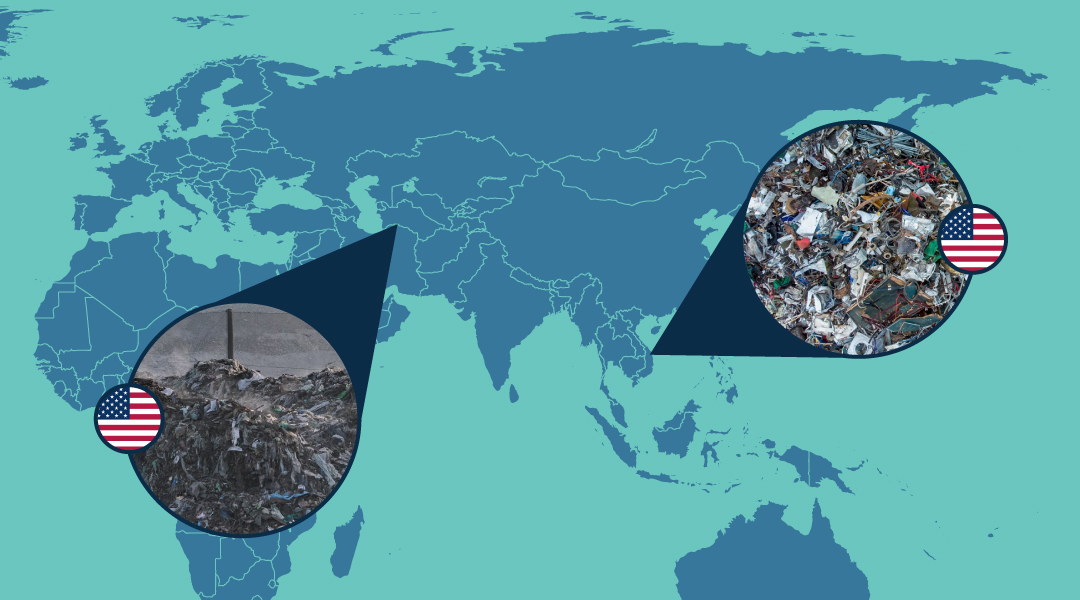
I recently saw an article sharing outcomes of a two-year investigation by the Basel Action Network examining e-waste malpractice. The study found that millions of tons of discarded electronics from the United States are being shipped overseas, and much of that waste is being illegally exported to developing countries that are not prepared to handle hazardous waste safely.
While neither I nor SOLARCYCLE independently verified the findings and facts in the report, it would not surprise me if they were accurate. I was also not surprised to see that a few of the bad actors also claim to recycle solar panels. I’ve spent over a decade studying how the world manages waste electrical and electronic equipment (WEEE) and I co-founded SOLARCYCLE to make sure the clean energy industry doesn't fall into similar malpractices.
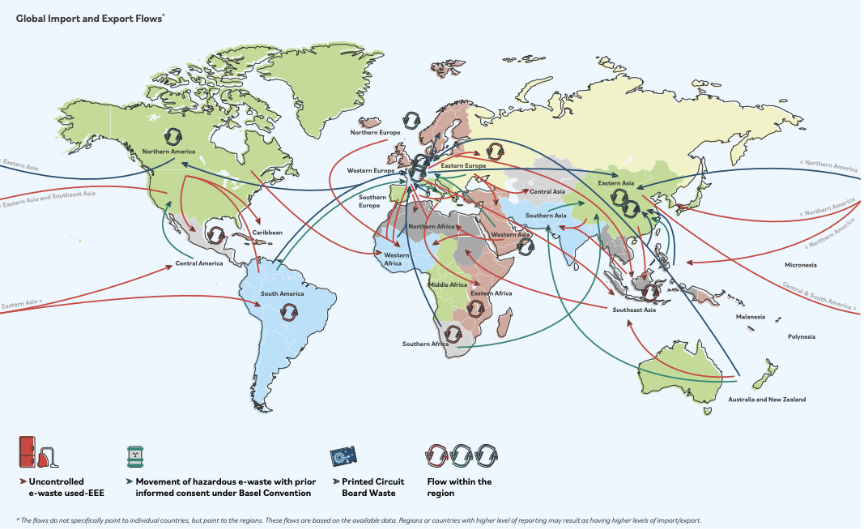
The investigation identified at least ten U.S. companies exporting used electronics to Asia and the Middle East, with roughly 2,000 containers (≈33,000 metric tons) leaving U.S. ports every month. Many shipments were mislabeled as “commodity materials” to evade detection. The companies behind the shipments, described as “e-waste brokers,” were reported to be sending the waste to companies in developing countries, rather than recycling it themselves.
Not only is this waste allegedly going to countries that wouldn’t be able to legally import it under the Basel Convention, but a significant portion of this material may be going into informal processing channels, which typically means open burning, acid leaching, and uncontrolled dumping. Peer-reviewed studies link these practices to elevated toxic exposures and serious public health risks in receiving communities.
Meanwhile, the issue of e-waste just keeps getting bigger. Global e‑waste hit 62 million metric tons in 2022 and continues to rise rapidly, with only a small fraction of waste properly recycled where it’s generated. That mismatch is a driver of transboundary dumping and informal processing.
While solar panels today make up a very small percentage of e-waste, recent trends suggest it could soon become the single largest source by 2040. It is imperative that the solar industry learn from the past and present challenges facing e-waste, and prioritize getting it right now before volumes hit crisis levels.
1) Enforce—and close—the export loopholes.
Align U.S. practice with Basel principles; end the misuse of “reuse” labels for non‑functional or obsolete equipment. Require truth‑in‑labeling and public disclosure of downstream facilities and processes.
2) Do your homework when looking for an end-of-life partner.
Unfortunately existing recycling certifications don’t go far enough. We must conduct our own due diligence. Are things being exported? Where to? What for? Is the destination country known to have a robust infrastructure to manage waste appropriately? Just because a company has a certification like R2, doesn’t mean they couldn’t mislabel materials––eight of the ten companies featured in this article have R2.
3) Build domestic circular capacity.
Invest in high‑recovery recycling, reverse logistics, and reuse programs that keep as much material onshore as possible. Not every step of the process needs to be done onshore––certain countries have more expertise and better infrastructure for things like metals smelting––but the more that can be recovered domestically, the better.
We built SOLARCYCLE precisely to solve this problem before the coming wave of solar waste overwhelms the system. By designing high-recovery, high-throughput PV recycling, we’re working to achieve “landfill parity” on cost while recovering the maximum amount of critical materials. Here are a few key differentiators between what we are doing and the companies featured in this recent investigation:
The bottom line is, whether you are recycling the servers in your datacenter or the solar panels that power those servers, you need to do your homework. Ask your recycling partner to show you who they are selling their materials to, where those materials are going for additional processing, and what kinds of health, safety and environmental laws exist in those countries. We built SOLARCYCLE to make sure the clean energy industry in the U.S. has a safe, sustainable, and scalable solar recycling solution in place before the first big wave of retired solar panels hit waste streams in the next few years.